- Call Us: 07976 213961
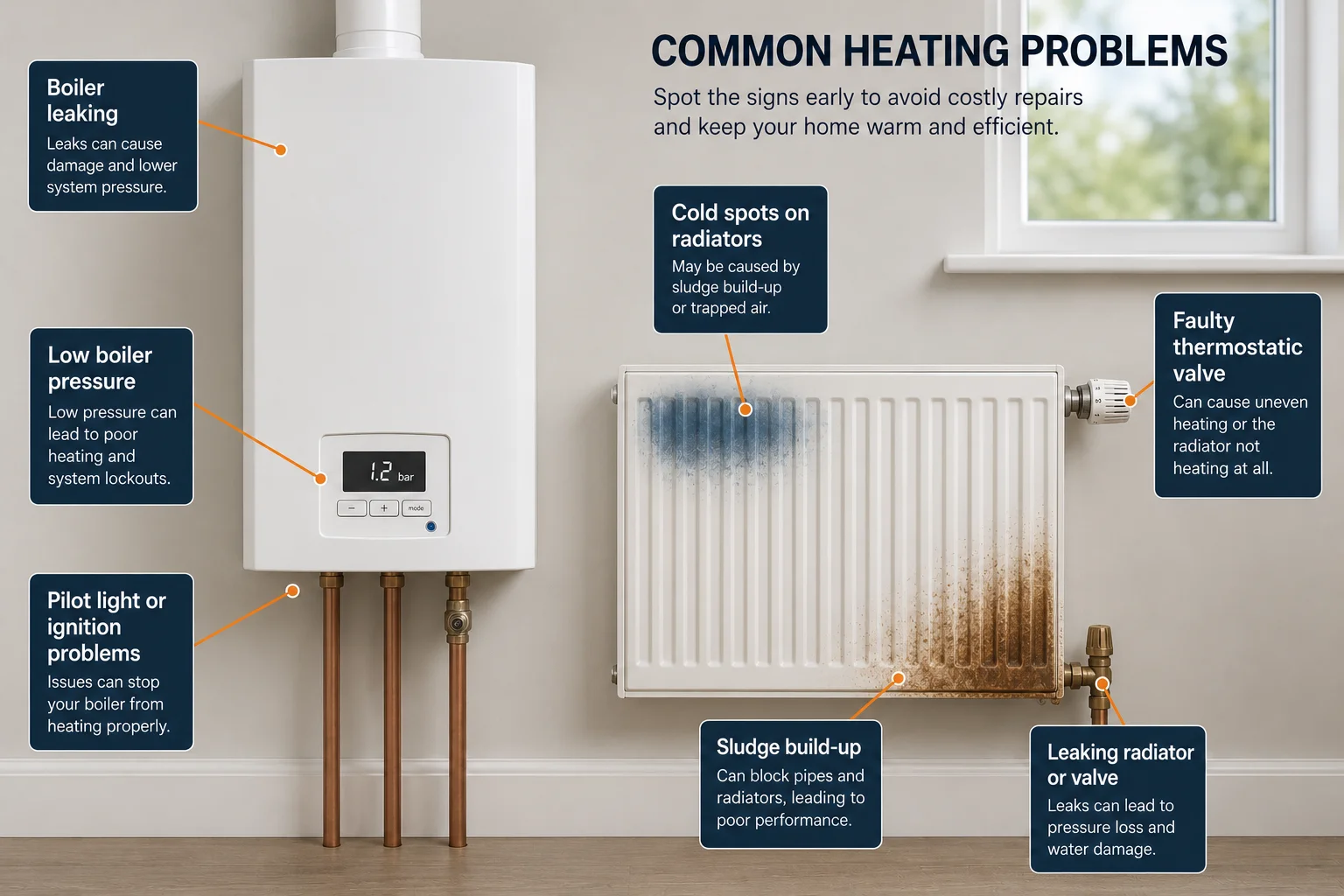
If your heating is on but a room still feels chilly, an unevenly heated radiator could be part of the problem. A radiator that stays hot at the top but cold at the bottom can indicate sludge or restricted water circulation.
At Nick Parris Heating Services, we help homeowners across Reading and the surrounding towns identify heating problems and choose the right solution. Here, we explain what cold patches can mean and when we recommend arranging a check.

Over time, corrosion inside a central heating system can produce rust particles. These can collect with other debris to form sludge, which settles inside radiators and restricts the movement of hot water.
This can leave the lower section cold while the top continues to heat up. However, temperature patterns alone cannot confirm the cause. Poor circulation can also contribute, so we recommend having the system assessed before deciding on treatment.
Bleeding releases trapped air. It is generally helpful when a radiator is cold at the top and warm further down, because air collects in the upper section.
It will not remove sludge from the bottom. If you have already bled a radiator and the lower section remains cold, repeatedly bleeding it is unlikely to resolve the underlying problem.
Where bleeding is appropriate, switch the heating off and let the radiator cool completely first. Follow the instructions for your system and check the boiler pressure afterwards, topping up only if needed and according to the manufacturer’s guidance. If you are unsure, we can help.
Uneven heating across the house can involve more than deposits inside a radiator. Valve settings, system balancing and circulation problems may affect how hot water reaches different rooms.
Balancing means adjusting the flow through individual radiators so heat is distributed appropriately around the home. It serves a different purpose from bleeding or cleaning.
When we investigate, it helps to know whether one radiator or several are affected, whether the problem started suddenly and whether any recent heating work has taken place.
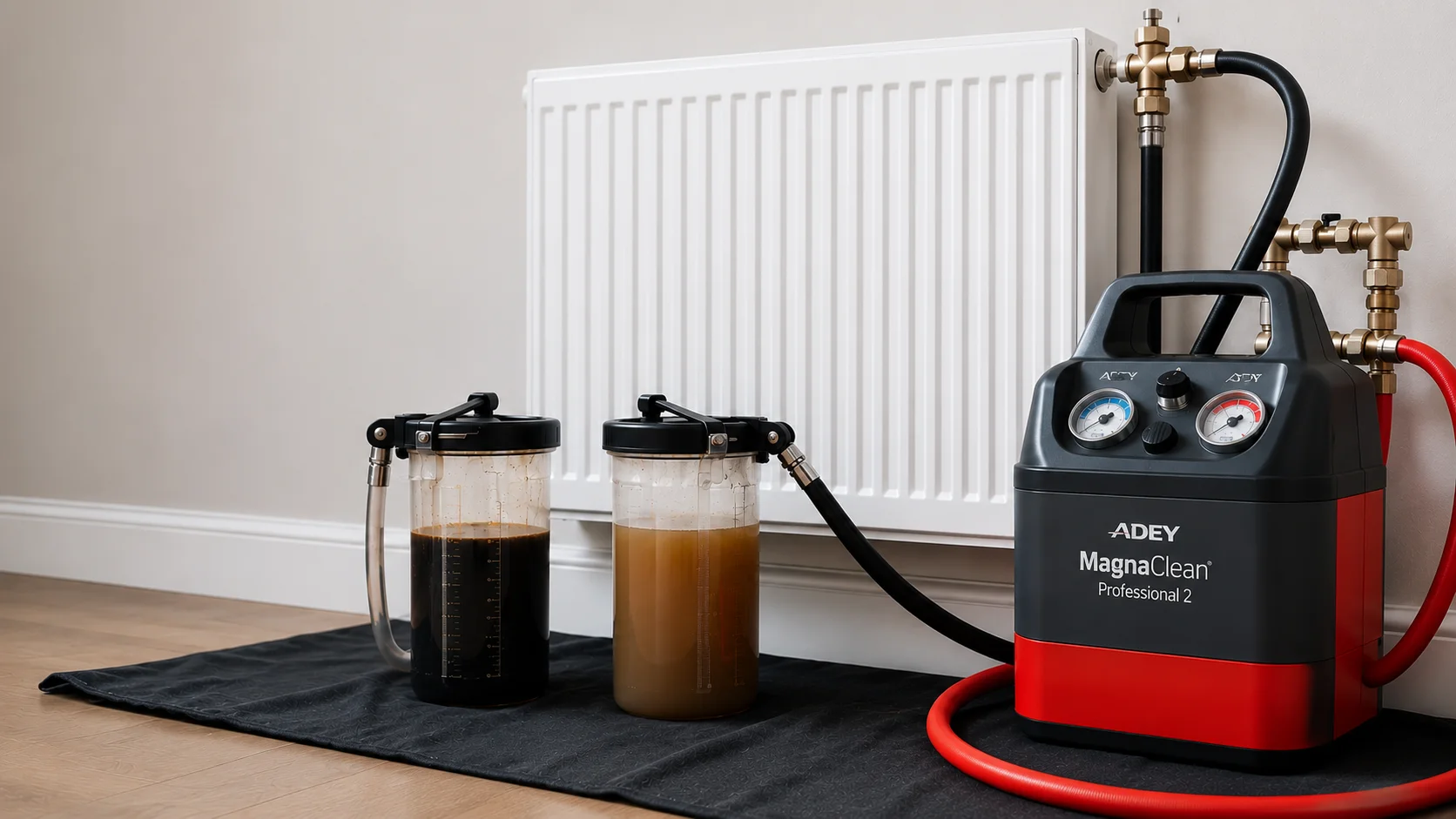
A power flush may be appropriate where sludge and debris are restricting circulation. It uses specialist equipment to clean the heating system and remove deposits.
However, a cold patch does not automatically mean the whole system needs power flushing. We first need to establish the cause and assess the condition of the installation. Depending on what we find, the appropriate work could involve a valve, balancing, cleaning an individual radiator or treating the wider system.
Professional flushing can help where deposits are responsible, but the treatment should suit the problem.
Suitable water treatment and filtration can help protect a central heating system. A magnetic filter captures magnetic corrosion particles circulating in the water, helping to prevent them from reaching the boiler.
If a filter is fitted, it also needs attention as part of ongoing maintenance. We can advise on the protection your system needs and whether its existing filter requires cleaning.
If your radiators have persistent cold patches or some rooms never seem to warm up properly, we can investigate.
At Nick Parris Heating Services, we are Gas Safe registered and Worcester Bosch accredited. We provide local heating services across Reading and the surrounding towns, with straightforward advice on the work your system needs.
Contact us to discuss the symptoms or find out more about our power flushing service.
Bleeding releases trapped air, which usually causes cold patches at the top. It will not remove sludge from the bottom. If the lower section stays cold after bleeding, we can investigate the cause.
Sludge collecting inside the radiator can restrict hot water circulation and leave cold patches at the bottom. Other circulation problems can cause similar symptoms, so we recommend an assessment before deciding on treatment.
No. A valve fault, balancing issue or another circulation problem could be responsible. We assess the system first and recommend a power flush only where it is appropriate.
Cold patches alone do not usually mean the heating must be switched off, but they deserve attention if they persist. We can check the system and identify why the room is struggling to warm up. If there are leaks or boiler fault messages, contact us promptly.

Nick Parris has more than 25 years of experience in plumbing, boiler installation and heating services, helping homeowners across Reading and the surrounding areas keep their homes warm, efficient and reliable.
As a Gas Safe registered heating engineer and Worcester Bosch accredited installer, Nick combines practical, hands on experience with straightforward advice. Our Help and Advice articles are written to give homeowners clear, useful information based on the questions and heating problems we deal with every day.