- Call Us: 07976 213961

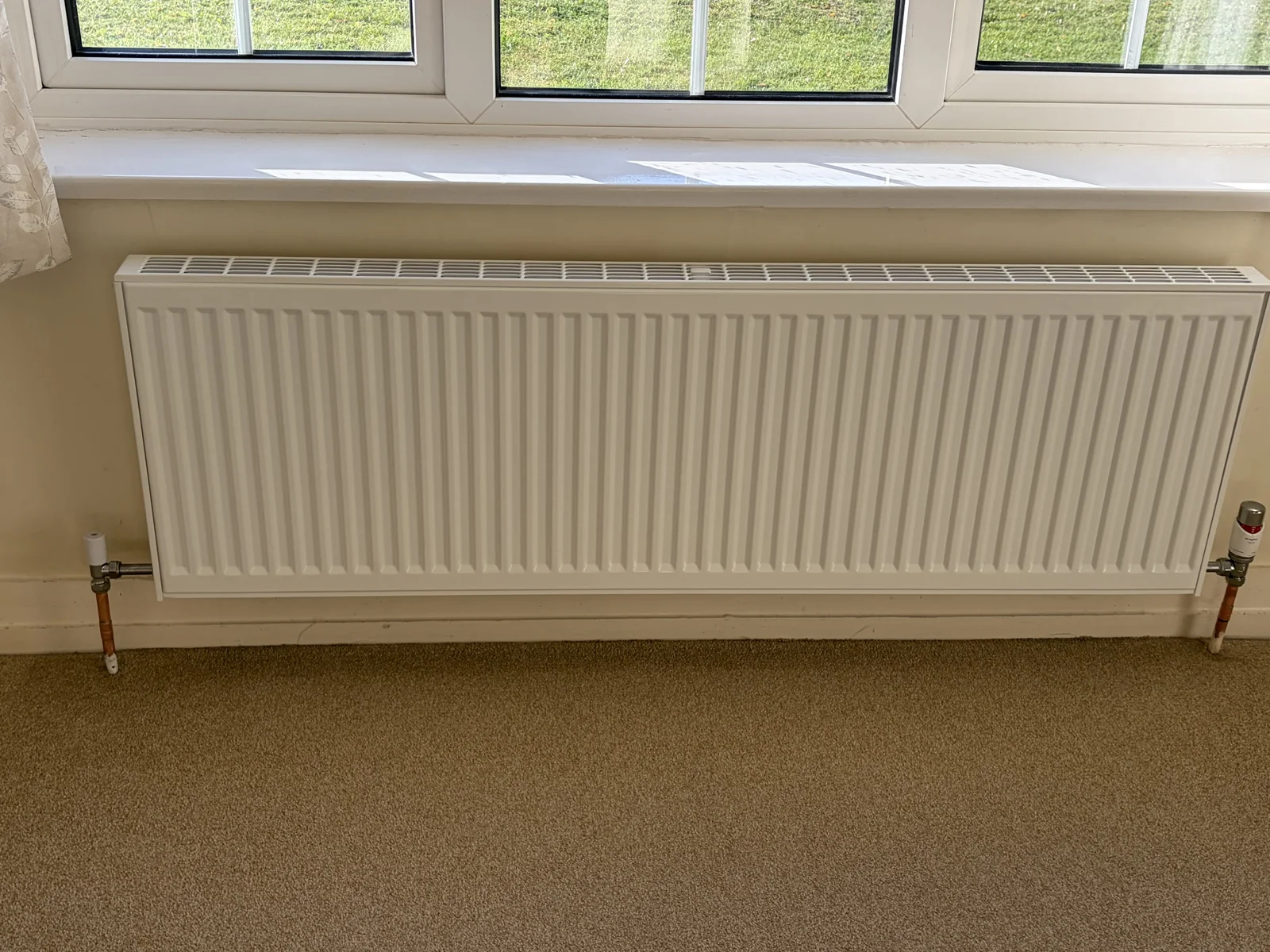
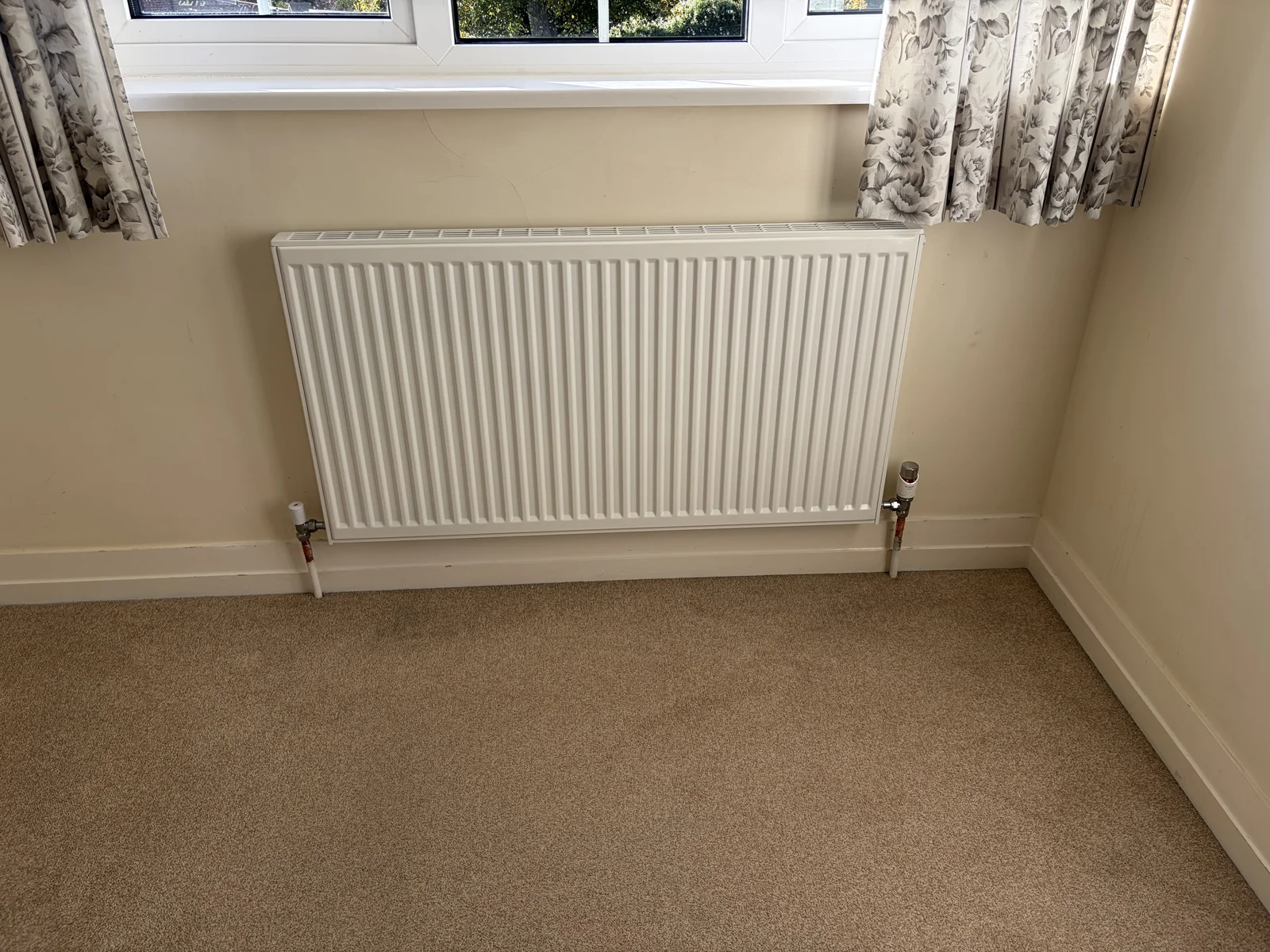
We replaced 11 radiators at a home in Goring, South Oxfordshire, where the originals were inefficient and prone to leaking. The finished installation is a good example of where to position a radiator and how hot water circulates through the heating system.
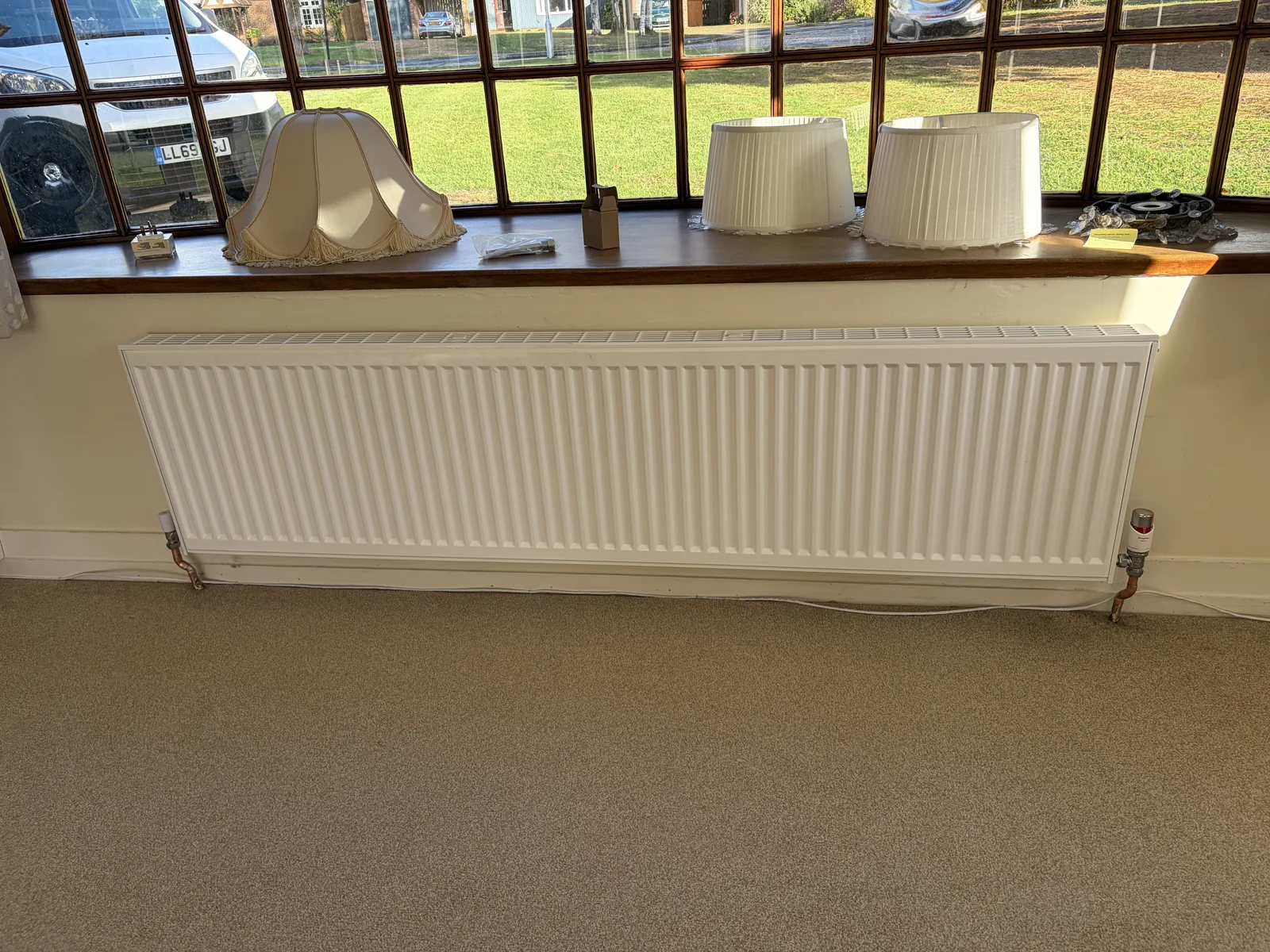
The original radiators had become inefficient and prone to leaking, so we replaced 11 in total. One of the new radiators, shown beneath the wide window, illustrates how a radiator’s size, shape and position can suit the room it heats.
Below a window is often a good spot, particularly in rooms with large areas of glass. On a cold day, air next to the window cools and sinks towards the floor. Warm air rising from the radiator helps counter that downward movement, making the area by the window feel more comfortable.
The long, low radiator in this Goring home makes use of the width beneath the sill. In another room, an open wall might work better, especially if full-length curtains or a sofa would block the heat. When we choose a radiator, we consider how much heat the room loses, the space available and how freely warm air can circulate around it.
The copper pipes at either end of the radiator in the photo are its connections to the heating circuit. Hot water enters through one connection, gives up some of its heat to the room and leaves through the other.
In a typical two pipe system, a pump circulates hot water along a flow pipe, with branches feeding individual radiators. After passing through a radiator, the cooler water joins a separate return pipe and travels back to be reheated. The same water keeps circulating while the heating is running. Each radiator has its own branch, so water can reach several radiators at the same time.
That’s where radiator balancing comes in. Water flows more easily along some routes than others. We adjust the flow through individual radiators so that each gets the water it needs to heat its room.
We fitted 11 replacement radiators throughout the home, including the wide panel radiator pictured beneath the window. If you have radiators that are leaking, slow to warm up or awkwardly positioned, we can help you work out which ones need replacing and where new radiators would work best.
An open wall can work just as well if the radiator provides enough heat for the room and warm air can circulate freely. We also consider where furniture and curtains will sit and how the pipework can reach the new position.
Yes, in many homes. The main consideration is how to route the flow and return pipes to the new position. We also check that there’s room for a radiator with enough heat output for the space.
Yes. If a single radiator is leaking or too small for the room, we can usually replace it on its own. We check the existing pipe connections and choose a suitable radiator for the room.
Some radiators have an easier route through the pipework, so hot water reaches them sooner. If several radiators get hot quickly while others stay cool, balancing may help. We also check for other possible causes, such as trapped air or a valve that isn’t opening properly.

Nick Parris has more than 25 years of experience in plumbing, boiler installation and heating services, helping homeowners across Reading and the surrounding areas keep their homes warm, efficient and reliable.
As a Gas Safe registered heating engineer and Worcester Bosch accredited installer, Nick combines practical, hands on experience with straightforward advice. Our Help and Advice articles are written to give homeowners clear, useful information based on the questions and heating problems we deal with every day.