- Call Us: 07976 213961
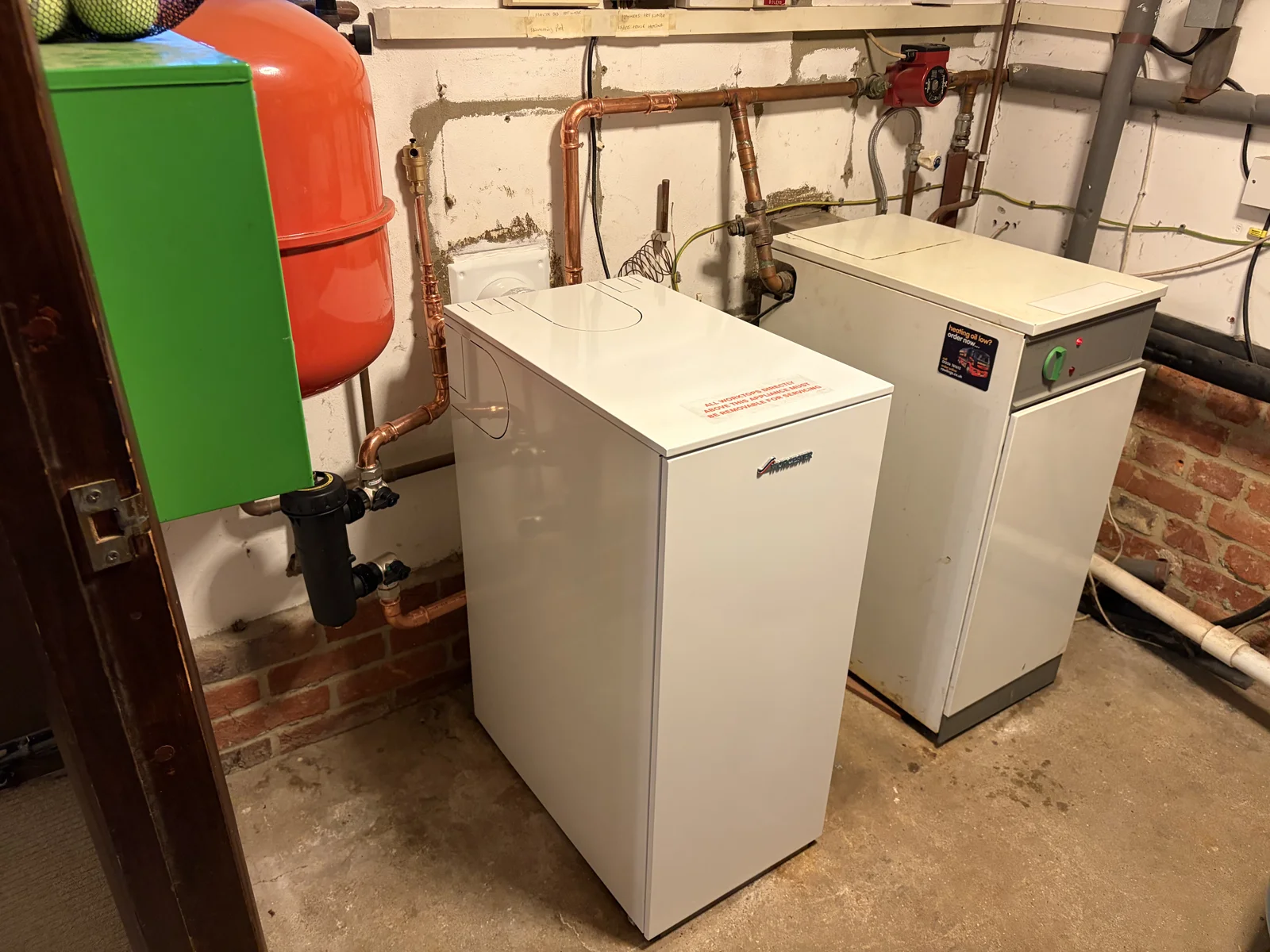
When the old oil boiler at a home near Hook developed an internal leak, we replaced it with the floor standing Worcester Bosch boiler shown in the foreground. If you’re used to mains gas, the radiators and heating controls will look familiar. The biggest difference is how the fuel gets to the boiler in the first place.
A mains gas boiler draws its fuel from the gas network. An oil boiler takes its fuel from a storage tank at the property. Most domestic oil boilers in the UK run on kerosene, which is delivered by tanker. When the heating controls call for heat, a pump feeds the oil through a small nozzle in the burner, turning it into a fine mist. The burner mixes that mist with air and ignites it. A heat exchanger then transfers the heat from the hot gases to the water that circulates through the radiators.
A modern condensing oil boiler extracts extra heat from the gases before they leave through the flue. As those gases cool, some of the water vapour turns back into liquid. That liquid is called condensate, and it drains away through a separate pipe. It’s the same principle used in a condensing gas boiler, with a different burner and fuel supply.
With oil heating, part of the system is outside the boiler room. Someone has to keep an eye on the fuel level, order the next delivery and make sure the tank and the line feeding the boiler stay in good condition. The tank can be older than the boiler it supplies, which is why we consider both when assessing a replacement.
When we quote for an oil boiler replacement, we look at the condition of the tank and fuel line, the route for the flue and where the condensate can drain. We also look at how the home gets its hot water. That helps us give you a quote that reflects the work your property needs.
If you’re considering a replacement, get in touch for an oil boiler quotation. We can arrange a visit to look at your existing system and explain your options.
Often, yes. We check the tank’s condition, its base and the fuel line before advising whether it can stay. A sound tank with a suitable fuel supply may have plenty of life left in it.
Yes. An oil combi boiler heats water as you need it, much like a gas combi. A boiler that works with a separate cylinder heats water for storage, ready for when you turn on a tap or shower.
We recommend a service once a year. An oil service can include checks on the burner and its nozzle, as well as an inspection of the storage tank and fuel pipework.
The term internal leak tells you where the leak is, while the source could be on the heating water side or the fuel side. An engineer needs to identify where the liquid is coming from before advising on the next step.

Nick Parris has more than 25 years of experience in plumbing, boiler installation and heating services, helping homeowners across Reading and the surrounding areas keep their homes warm, efficient and reliable.
As a Gas Safe registered heating engineer and Worcester Bosch accredited installer, Nick combines practical, hands on experience with straightforward advice. Our Help and Advice articles are written to give homeowners clear, useful information based on the questions and heating problems we deal with every day.
